
Workplace fairness is defined as employees’ perception of equitable treatment across four key dimensions: distributive, procedural, interpersonal, and informational justice. Researchers and HR professionals call this concept organizational justice, the recognized industry term for how people evaluate whether their employer treats them fairly. Perception drives everything here. Two employees working under identical policies can experience fairness very differently depending on how decisions are communicated and enacted. Workplacefairness has championed this understanding since 1994, connecting employment rights attorneys with workers and advocates to build fairer workplaces for everyone.
What is workplace fairness and its four core dimensions?
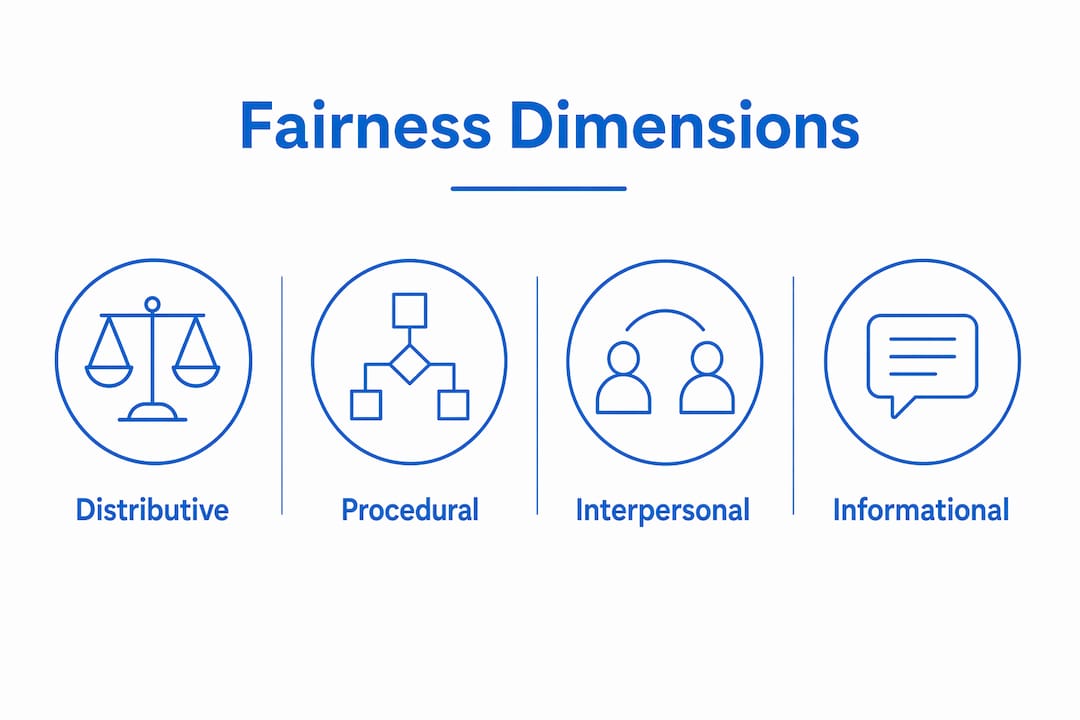
Workplace fairness, or organizational justice, rests on four dimensions that together shape whether employees feel valued. Neglecting even one dimension produces systemic feelings of injustice, even when the other three are handled well. That asymmetry is what makes the framework so useful for diagnosing problems.
- Distributive justice concerns the fairness of outcomes. Pay, promotions, and workload distribution all fall here. An employee who works longer hours than a peer but receives the same raise will perceive distributive injustice, regardless of how politely the decision was delivered.
- Procedural justice concerns the fairness of the decision-making process itself. Were the criteria clear? Was the employee given a voice? Consistent, transparent processes build trust even when the final outcome disappoints.
- Interpersonal justice concerns how leaders and managers treat people day to day. Dignity, respect, and basic courtesy are not soft extras. They are core components of fair treatment at work.
- Informational justice concerns the quality and honesty of explanations. When managers explain why a decision was made, employees are far more likely to accept outcomes they dislike.
Fairness is a subjective perception shaped by process transparency and respectful communication, not merely by organizational policy. Identical policies produce very different fairness experiences depending on how decisions are communicated and enacted. That gap between policy and perception is where most workplace fairness problems live.
Pro Tip: If your organization scores well on pay equity but poorly on manager communication, employees will still report feeling treated unfairly. Audit all four dimensions, not just compensation.

How does workplace fairness affect employee behavior and culture?
Fairness perceptions directly shape how employees behave at work. A study of 387 employees across manufacturing sectors found strong positive correlations between workplace fairness dimensions and employee citizenship behavior. Higher perceived fairness associates with increased altruism, conscientiousness, and civic virtue. Procedural fairness showed the strongest link to compliance and cooperation.
The practical meaning is significant. Employees who feel fairly treated do more than their job descriptions require. They help colleagues, speak up about problems, and invest in the organization’s success. Employees who feel treated unfairly do the opposite. They withdraw, comply minimally, and eventually leave.
“Lack of fairness correlates with higher cynicism, stress, and burnout, undermining organizational trust and long-term performance. Fairness functions as a psychological force, not a soft skill.”
The table below shows how each fairness dimension connects to specific employee outcomes.
| Fairness dimension | Employee outcome |
|---|---|
| Distributive justice | Satisfaction with pay and promotions |
| Procedural justice | Compliance, cooperation, and trust in leadership |
| Interpersonal justice | Psychological safety and willingness to speak up |
| Informational justice | Reduced cynicism and acceptance of difficult decisions |
Fairness also connects directly to psychological safety and belonging. When employees feel comfortable speaking up without fear of retaliation, they participate more fully and contribute more meaningfully. Organizations that build this environment see lower turnover and stronger long-term performance.
What is the difference between equality and equity at work?
Equality means giving everyone the same thing. Equity means giving people what they actually need to have a fair chance. The distinction matters enormously in practice.
Consider two employees onboarding at the same company. One has 15 years of industry experience. The other is entering the workforce for the first time. Giving both the same onboarding program treats them equally. Giving the new employee additional mentorship and structured check-ins treats them equitably. The goal in both cases is the same: a fully capable, confident contributor. The path to that goal differs.
Modern HR frameworks in 2026 define fairness as equity, providing tailored resources and support balanced against organizational capacities, rather than strict equal treatment. This shift acknowledges that diverse employees have diverse needs, and that identical treatment often reproduces existing disparities rather than correcting them.
Equity shows up in several practical ways:
- Pay transparency. Publishing pay bands and explaining the rationale behind compensation decisions removes ambiguity and reduces perceptions of bias.
- Flexible work arrangements. Offering options that reflect different caregiving responsibilities, health needs, or commuting situations gives employees equitable access to full participation.
- Anti-bias training. Structured programs that address systemic barriers in hiring and promotion help level the field for underrepresented groups.
- Accessible accommodations. Providing disability accommodations or language support ensures that structural differences do not become permanent disadvantages.
Pro Tip: Equity does not mean unlimited customization. It means identifying where standard processes create unequal outcomes and adjusting those specific points. Start with your promotion and pay review processes.
How can you measure and promote fairness in your organization?
Measuring workplace fairness starts with asking employees directly. Validated survey instruments that assess all four dimensions of organizational justice give organizations a baseline. Pulse surveys run quarterly reveal whether fairness perceptions are improving or declining over time. Exit interviews capture the honest views of employees who have already decided to leave.
Beyond surveys, routine pay equity audits are a workplace fairness best practice in 2026. These audits compare compensation across roles, tenure, and demographic groups to identify unexplained gaps. Strong HR frameworks that include clear policy documentation and consistent application correlate with lower legal risk and better employee outcomes.
Frontline managers carry the most responsibility for day-to-day fairness. Relying solely on HR policies is insufficient to build a fair workplace. Managers shape interpersonal and informational justice through every conversation, performance review, and team meeting. Leadership development programs that focus on communication skills, accountability, and anti-bias awareness directly improve fairness perceptions.
Promoting fairness in organizations also requires clear documentation. When employees understand how decisions are made and can see that the same criteria apply to everyone, trust builds. When criteria are vague or inconsistently applied, even fair outcomes feel suspect.
- Conduct annual pay equity audits and share summary findings with employees.
- Train managers on the four dimensions of organizational justice, not just compliance requirements.
- Publish clear promotion criteria and apply them consistently across teams.
- Create formal channels for employees to raise fairness concerns without fear of retaliation.
- Review onboarding and performance management processes for equity gaps at least once per year.
Pay transparency means publishing pay bands and explaining objective, data-driven rationales for compensation decisions. It does not mean disclosing individual salaries. That distinction matters because clear rationale prevents perceptions of bias while protecting individual privacy.
Workplacefairness connects employees with labor rights resources and legal guidance that support this kind of informed advocacy. Understanding your rights is the foundation of promoting fairness effectively.
Key Takeaways
Workplace fairness is an organizational justice framework built on four dimensions, and perception of all four determines whether employees feel genuinely treated well.
| Point | Details |
|---|---|
| Four dimensions define fairness | Distributive, procedural, interpersonal, and informational justice all shape employee experience. |
| Perception beats policy | Identical policies produce different fairness outcomes depending on how decisions are communicated. |
| Equity outperforms equality | Tailored support for diverse needs creates fairer outcomes than uniform treatment. |
| Managers are the frontline | Frontline managers have more influence on daily fairness than any HR policy document. |
| Measurement drives improvement | Pay equity audits, surveys, and clear documentation are the practical tools for promoting fairness. |
Fairness Is Not a Checkbox
The most common mistake I see organizations make is treating workplace fairness as a compliance exercise. They update the employee handbook, run one anti-bias training, and consider the job done. That approach misses the point entirely.
Fairness is a psychological experience. Employees feel it or they do not, and no policy document changes that feeling on its own. What changes it is the behavior of the person sitting across from you in a performance review. It is whether your manager explains a difficult decision or simply announces it. It is whether your concerns get a real response or a polite brush-off.
The research on organizational justice is clear: procedural fairness and interpersonal fairness carry enormous weight. Employees will accept outcomes they dislike if they trust the process and feel respected. They will resent outcomes they like if the process felt arbitrary or demeaning. That asymmetry should reshape how organizations invest in fairness programs.
The link between fairness and mental health is also underappreciated. Chronic unfairness produces stress, cynicism, and burnout at rates that damage both individuals and organizations. Addressing fairness is not a soft priority. It is a direct investment in workforce health and organizational resilience.
My strongest advice for employees: document your experiences, know your rights, and advocate clearly. For leaders: stop delegating fairness to HR and start treating it as a core management competency. The two groups need each other to make progress.
— Max
Workplacefairness Resources for Employees in 2026
Workplacefairness has spent over 30 years connecting employees with the knowledge they need to advocate for fair treatment at work.
Whether you are starting a new job or navigating a difficult workplace situation, understanding your rights is the first step toward equitable treatment. Workplacefairness offers practical, attorney-informed guidance on the workplace rights new employees need to know in 2026, covering everything from pay transparency to anti-discrimination protections. For employees in the gig economy, the gig worker labor rights resource addresses the unique fairness challenges that come with non-traditional employment. Knowledge is the foundation of every fair workplace.
FAQ
What is organizational justice?
Organizational justice is the academic and professional term for workplace fairness. It describes employees’ perceptions of equitable treatment across distributive, procedural, interpersonal, and informational dimensions.
Why does perception matter more than policy in workplace fairness?
Identical policies produce different fairness experiences depending on how decisions are communicated and enacted. Perception, not just written rules, determines whether employees feel fairly treated.
How does unfairness affect employee wellbeing?
Lack of fairness correlates with higher cynicism, stress, and burnout, which undermine organizational trust and long-term performance. Fairness functions as a psychological force with direct mental health consequences.
What is the difference between pay equity and pay transparency?
Pay equity means employees receive equal pay for equal work regardless of demographic factors. Pay transparency means publishing pay bands and explaining the rationale behind compensation decisions, without necessarily disclosing individual salaries.
How can employees advocate for fair treatment at work?
Employees can document their experiences, learn their legal rights through resources like Workplacefairness, raise concerns through formal channels, and request clear explanations for decisions that affect their pay, promotion, or working conditions.