
The Pregnancy Discrimination Act makes it unlawful for employers to fire, demote, or deny benefits to you because of pregnancy, childbirth, or related medical conditions, treating that as a form of sex discrimination under Title VII. Two newer federal laws add to that foundation: the Pregnant Workers Fairness Act requires accommodations, and the PUMP Act guarantees break time and space to pump. The EEOC and the Department of Labor enforce these rights, and strict deadlines apply once discrimination occurs.
TL;DR:
- Pregnant workers are protected from discrimination by employers with 15 or more employees, including during pregnancy, childbirth, recovery, and related health conditions.
- Discrimination often appears through routine decisions like firing, unequal benefits denial, or inconsistent accommodations, especially after pregnancy signals.
- The Pregnant Workers Fairness Act and PUMP Act supplement the PDA by requiring reasonable accommodations and break time to express milk, enforced by EEOC and Department of Labor.
- Requests for accommodations must be clear and specific, with an interactive process where employers can only deny if undue hardship applies.
- Filing deadlines are generally 180 days for EEOC claims and 45 days for federal employee complaints, with remedies like back pay, reinstatement, or damages if discrimination is proven.
Table of Contents
- What the Pregnancy Discrimination Act covers and who it protects
- What pregnancy discrimination looks like in practice
- How the PDA works alongside PWFA, the PUMP Act, ADA, and FMLA
- How to request accommodations and what the interactive process looks like
- Filing a charge: deadlines and what to expect from EEOC or DOL
- What remedies look like and how retaliation claims are handled
- How Workplace Fairness supports workers navigating these claims
- Where employers get it wrong and what employees should prioritize
- FAQ
- Sources
What the Pregnancy Discrimination Act covers and who it protects
Congress passed the Pregnancy Discrimination Act in 1978 as an amendment to Title VII of the Civil Rights Act of 1964, closing a gap that had let employers treat pregnancy as grounds for different treatment. The law requires that pregnant workers be treated the same as any other employee with a similar ability or inability to work, whether that comparison involves light duty, medical leave, or health insurance.
Coverage extends to employers with 15 or more employees, the same threshold that applies to most Title VII protections. The law reaches further than many workers expect:
- Current pregnancy, childbirth, and recovery are protected, along with related medical conditions like gestational diabetes or preeclampsia.
- Past pregnancies cannot be held against you in hiring or promotion decisions.
- Potential or intended pregnancy, including infertility treatment, falls under the same protections.
- Job applicants, not just current employees, are covered if an employer rejects them because of pregnancy.
That scope matters because discrimination often surfaces before someone is ever hired, not only after they announce a pregnancy to a current employer.
What pregnancy discrimination looks like in practice
Pregnancy discrimination rarely announces itself directly. It shows up in decisions that would seem routine if pregnancy weren’t the reason behind them: a schedule change, a sudden performance review, a benefits denial that happens to coincide with a maternity leave request.
- An employer fires a worker shortly after learning she is pregnant, citing vague performance concerns that never appeared in writing before.
- A manager forces an employee onto unpaid leave instead of offering the light-duty assignment available to workers recovering from other medical conditions.
- A company denies health insurance coverage for pregnancy-related care while covering comparable conditions for other employees.
- A supervisor applies light-duty rules inconsistently, granting accommodations to a worker with a back injury but refusing the same accommodation to a pregnant employee with lifting restrictions.
- Coworkers or supervisors make repeated comments about a worker’s pregnancy, capacity, or plans to return, creating a hostile work environment once the conduct becomes severe or pervasive.
The EEOC advises documenting these incidents and reporting them through internal channels, since that notice triggers an employer’s legal duty to investigate and respond. Save emails, write down dates and witnesses, and keep copies of performance reviews from before and after your employer learned about the pregnancy.
Pro Tip: Keep a simple log with dates, names, and direct quotes as soon as something feels off. Memory fades, but a contemporaneous note holds up.
How the PDA works alongside PWFA, the PUMP Act, ADA, and FMLA
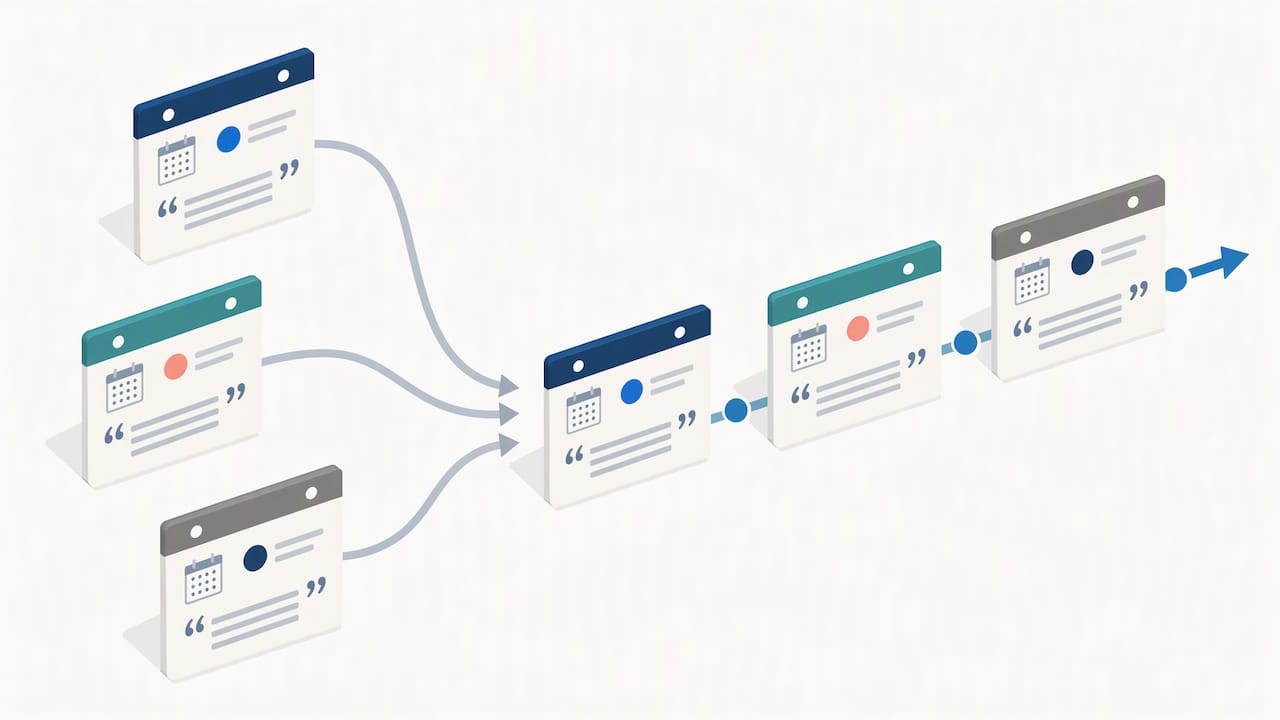
The Pregnancy Discrimination Act doesn’t stand alone anymore. Several newer federal laws fill gaps that the PDA left open, and knowing which one applies to your situation changes how you ask for help.
- The Pregnant Workers Fairness Act requires covered employers to provide reasonable accommodations for known limitations tied to pregnancy, childbirth, or related conditions, unless doing so causes undue hardship, even when those limitations wouldn’t qualify as a disability under the ADA.
- The PUMP Act, part of the Fair Labor Standards Act, requires reasonable break time and a private, non-bathroom space to express milk for the duration of the nursing period after a child’s birth, as detailed in this practical pumping schedule for newborns.
- The Americans with Disabilities Act applies when a pregnancy-related condition, like gestational diabetes or a lifting restriction after a C-section, rises to the level of a disability.
- The Family and Medical Leave Act offers unpaid, job-protected leave for eligible employees, which operates separately from accommodation rights and often runs alongside them.
The EEOC enforces the PDA, PWFA, and ADA, while the Department of Labor’s Wage and Hour Division handles PUMP Act and FMLA matters, so the agency you contact depends on which right has been violated.
How to request accommodations and what the interactive process looks like
Asking for an accommodation under the PWFA or PDA works best when you make the request clear and specific. Vague complaints get vague responses; specific requests get tracked and addressed.
- Put your request in writing to your supervisor or HR, naming the limitation (for example, “I can’t lift more than 20 pounds”) and the change you’re asking for (a temporary reassignment or a stool at your workstation).
- Expect your employer to engage in an interactive process, which means discussing options back and forth rather than issuing a single yes-or-no answer.
- Know that an employer can deny a request only if it would cause undue hardship, a standard that considers cost and operational impact, not mere inconvenience.
- Follow up in writing after any verbal conversation so there’s a paper trail showing what was discussed and decided.
Our two-sentence guide to requesting PWFA accommodations and our sample accommodation request language can help you frame the request clearly the first time.
Pro Tip: Keep every accommodation request and response in one folder, even informal texts. A pattern of delay or denial is easier to prove with a timeline than with memory alone.
Filing a charge: deadlines and what to expect from EEOC or DOL
Timing drives everything in a discrimination claim. Miss the window and even a strong case can be dismissed before anyone looks at the facts.
- You generally must file a charge with the EEOC within 180 days of the discriminatory act, extended to 300 days in states with their own fair employment agencies.
- Federal employees face a shorter clock: 45 days to contact an EEO counselor before a formal charge can proceed.
- PUMP Act and FLSA violations go to the Department of Labor’s Wage and Hour Division, which can investigate pay and break-time complaints separately from EEOC charges.
- Many states and cities have their own pregnancy discrimination laws, some with longer filing windows or broader coverage than federal law, so check local rules before assuming the federal deadline is your only option.
Our step-by-step complaint process guide walks through what happens after you file, including mediation, investigation, and the right-to-sue letter that opens the door to court.
What remedies look like and how retaliation claims are handled
Federal law offers real relief when a claim succeeds, though the specific remedy depends on which statute applies.
- Reinstatement and back pay are common outcomes in PDA and PWFA cases where an employee was fired or demoted unlawfully.
- Liquidated damages are available under the FLSA for PUMP Act violations, on top of any unpaid wages tied to denied break time.
- Injunctive relief can force an employer to change a policy, not just compensate one worker.
Retaliation for filing a complaint, such as a sudden schedule cut or a new disciplinary write-up, is illegal in its own right. The Department of Labor notes that pumping-space violations after April 28, 2023 can trigger additional remedies beyond unpaid wages, underscoring how seriously regulators treat these protections. If retaliation follows a complaint, document the timing closely: a clear link between your complaint and the employer’s next move strengthens the case considerably.
How Workplace Fairness supports workers navigating these claims
We started in 1994 as an organization built on the idea that employment attorneys and everyday workers do better work together than apart.
Beyond this guide, we maintain a comparison of FMLA and ADA protections for readers juggling leave and disability questions at the same time, along with templates for accommodation requests and a full walkthrough of the complaint process. Every resource stays free and written in plain language, because understanding your rights shouldn’t require a law degree.
Where employers get it wrong and what employees should prioritize
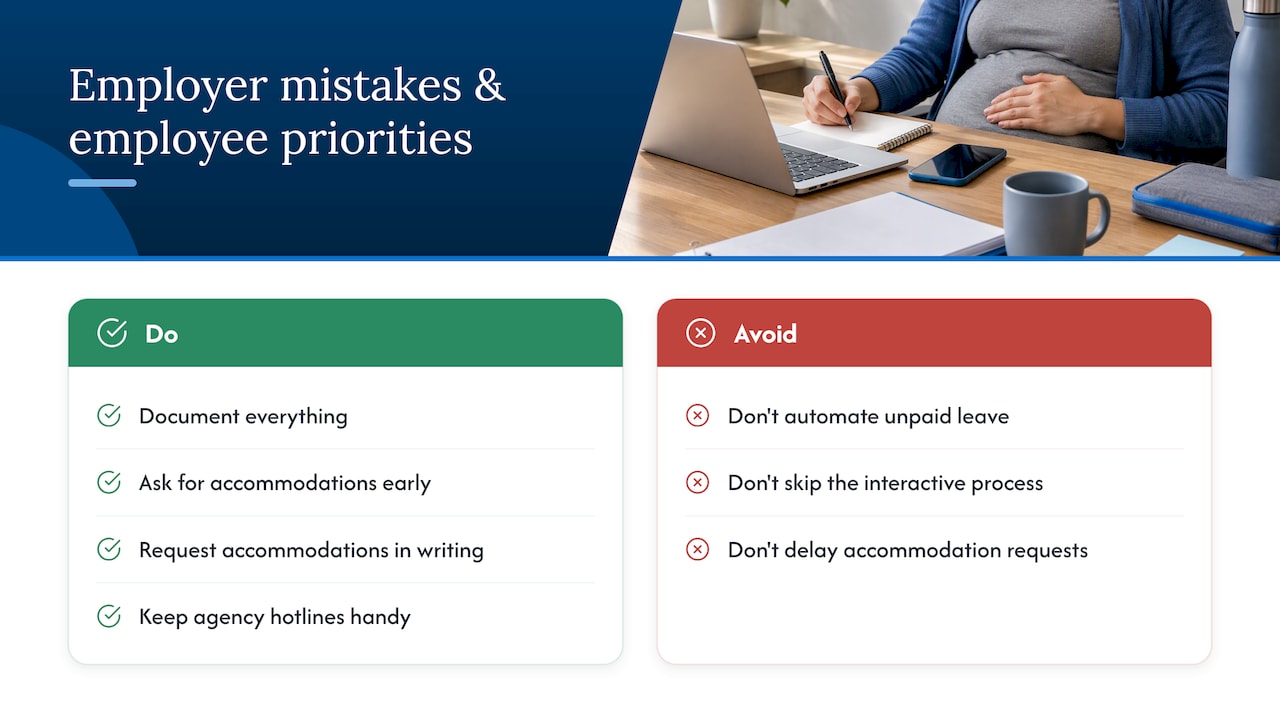
The most common misstep we see is the blanket policy: automatically pushing pregnant employees onto unpaid leave instead of asking what accommodation they actually need. That approach violates the interactive process requirement built into the PWFA, yet it persists because it’s easier than individualized conversation.
If you’re navigating this now, document everything, ask for accommodations early and in writing, and keep agency hotline numbers on hand. For anything involving termination or a denied accommodation with real financial stakes, a consultation with an employment attorney is worth the hour it takes.
— Max
This article is general information, not a substitute for advice from a qualified lawyer. Consult a qualified legal professional about your own circumstances before acting on anything here.
FAQ
Who does the Pregnancy Discrimination Act apply to?
The PDA applies to employers with 15 or more employees, covering current employees, job applicants, and anyone affected by past or potential pregnancy. It treats pregnancy-based treatment as a form of sex discrimination under Title VII.
Can a pregnant woman be fired for poor performance?
Yes, an employer can terminate a pregnant employee for genuine, documented performance problems that would lead to the same outcome for any other worker. The issue arises when performance concerns appear only after an employer learns of the pregnancy, since that timing can suggest the real reason was discriminatory.
Can you sue for being fired while pregnant?
You can pursue a claim, but federal law generally requires filing a charge with the EEOC first, within 180 or 300 days depending on your state, before a lawsuit can proceed. The EEOC’s investigation and right-to-sue letter are typically required steps before a private suit moves forward.
What are some examples of pregnancy discrimination in the workplace?
Common examples include firing or demoting an employee shortly after a pregnancy announcement, denying light-duty accommodations offered to other workers with similar restrictions, and cutting off health benefits tied to pregnancy care. Harassment, such as repeated negative comments about a worker’s pregnancy, can also qualify when it becomes severe or frequent enough to create a hostile environment.
How does the PUMP Act affect pregnant and postpartum employees?
The PUMP Act requires most employers to provide reasonable break time and a private, non-bathroom space to express milk for up to one year after childbirth. A bathroom, even a private one, does not meet the legal standard for pumping space.
Sources
- Legal rights of pregnant workers under federal law | EEOC
- Pregnancy accommodations in the workplace | Tulane Law