
There is no single federal pay transparency law for job postings in the United States. The rules come from states, and a growing number of them require employers to share a pay range with applicants and, in many cases, with current employees seeking a promotion or transfer. As of August 1, 2026, 16 states plus Washington, D.C., have statewide pay transparency laws in effect, and Delaware’s statewide law takes effect September 26, 2027. Separate salary history bans stop employers in many states from asking what you earned in your last job. This guide explains how both kinds of law work, how to find out what applies where you work, and what to do when an employer ignores the rules.
TL;DR
- Pay transparency laws generally require employers to disclose a wage or salary range in job postings or at a set point in the hiring process. Details differ by state.
- Salary history bans stop employers from asking about, or relying on, your past pay. They do not automatically bar questions about what you expect to earn.
- Federal law already protects many employees’ right to talk about wages with coworkers, whatever your state requires.
- If an employer breaks a disclosure or salary history rule, you can often file an administrative complaint or, in some states, bring a civil action. Washington is a clear example.
- Check your state labor agency’s official page for the current rules before you rely on any summary, including this one.
Table of Contents
- What pay transparency laws actually require
- Which states require pay ranges
- How the rules differ: three examples
- Salary history bans: when employers may ask about past pay
- Can your employer tell you not to discuss your pay?
- How to use a posted range in your own job search
- What to do when an employer breaks the rules
- Perspective
- Support free guidance on your rights
- FAQ
- Sources
What pay transparency laws actually require
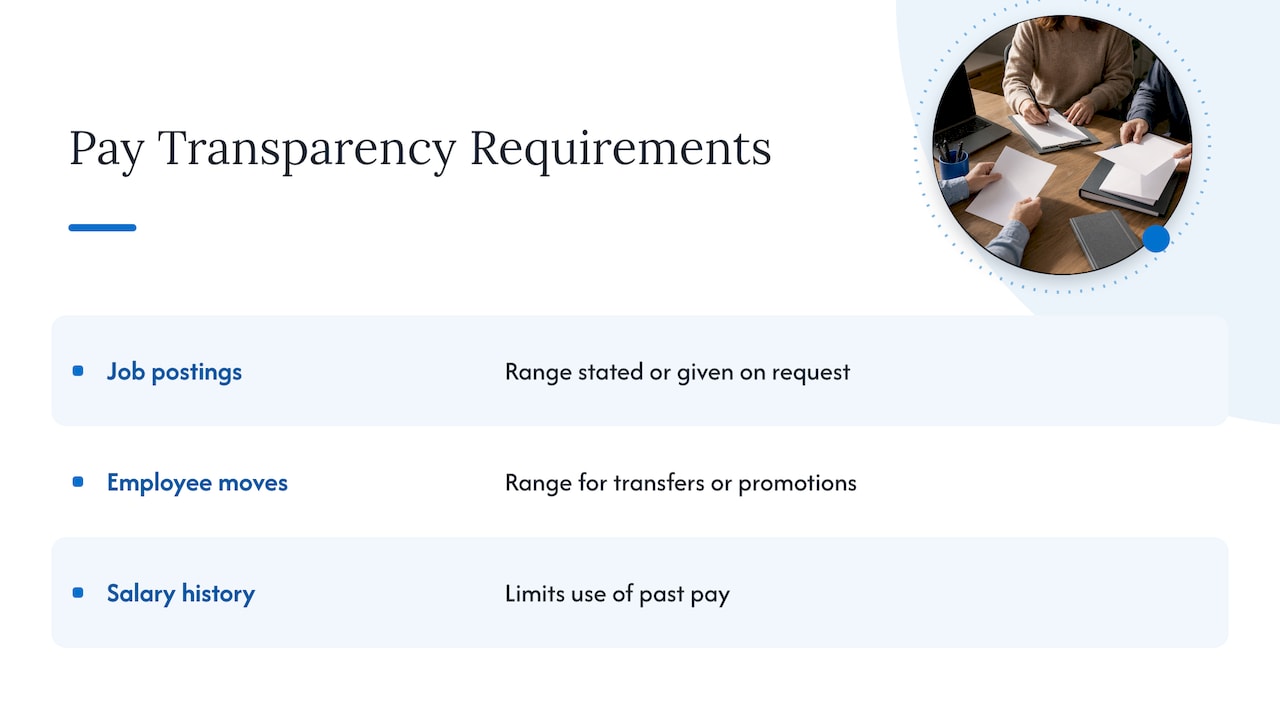
The phrase covers several different obligations. The most common is a requirement to state the pay range in a job posting or to give it to an applicant on request. Others apply to current employees, such as providing the range when someone is offered a transfer or promotion. A third group restricts the use of salary history. These laws build on older anti-discrimination protections such as the Equal Pay Act and Title VII, but they go further by requiring specific, practical steps from employers.
We think of this as a fairness tool as much as a legal one. When pay ranges are visible, workers can judge an offer against a benchmark instead of guessing. Disparities that have persisted for generations along lines of gender, race and ethnicity are harder to hide when ranges are stated up front.
Federal law: what exists and what does not
No federal statute requires private employers to post salary ranges. Congress has seen proposals, but until one passes, the patchwork of state and local rules governs. The federal rule workers most often need is a different one: the right to discuss pay with coworkers, covered below.
Which states require pay ranges
The list keeps growing, and effective dates, employer-size thresholds and enforcement details differ from place to place. Rather than reproduce a chart that will age quickly, here is how to read the landscape.
- Statewide laws in effect: 16 states plus D.C. had laws in effect as of August 1, 2026. Delaware’s is scheduled for September 26, 2027.
- Local laws: Some cities and counties add their own requirements, so a worker in a state without a statewide law may still be covered.
- Pending bills: Legislatures in several other states have considered proposals. A state without a law this year may have one next year.
For a running list with effective dates and affected employers, HR Dive maintains a tracker of states and localities that require pay range disclosure. Use it to find your jurisdiction, then confirm the details on your state labor department’s own site.
How the rules differ: three examples
The examples below show how much the details can change from one state to the next.
Washington
Washington’s Equal Pay and Opportunities Act requires each job posting to state the wage scale or salary range, or the fixed wage if there is no range, plus a general description of benefits and other compensation. The disclosure rule applies to employers with 15 or more employees. On request, an employer must also give the range or fixed amount to an employee who is offered an internal transfer or promotion.
Maryland
According to HR Dive’s tracker, Maryland’s requirement took effect October 1, 2024. Employers must disclose the minimum and maximum salary or hourly wage and benefits for positions performed at least partly in Maryland. If no posting was made available to an applicant, the employer must disclose pay information before a pay discussion.
Connecticut
Connecticut amended its law, and the amendment took effect October 1, 2026. The change affects timing: employers must provide pay range and benefits information at the earliest of the applicant’s request or before any discussion or offer of pay. Because the amendment is recent, check the Connecticut Department of Labor’s current guidance.
What the three share
In each case, the question is not only whether a range appears in the ad. It is also when the employer must share it, how many employees trigger coverage, and whether the rule reaches remote jobs and internal moves. Ask all four questions about your own state.
Salary history bans: when employers may ask about past pay
A salary history ban limits an employer’s ability to ask about your previous pay or to use it in setting your offer. The thinking is simple: if past pay reflects past underpayment, using it as a starting point carries that gap forward from job to job.
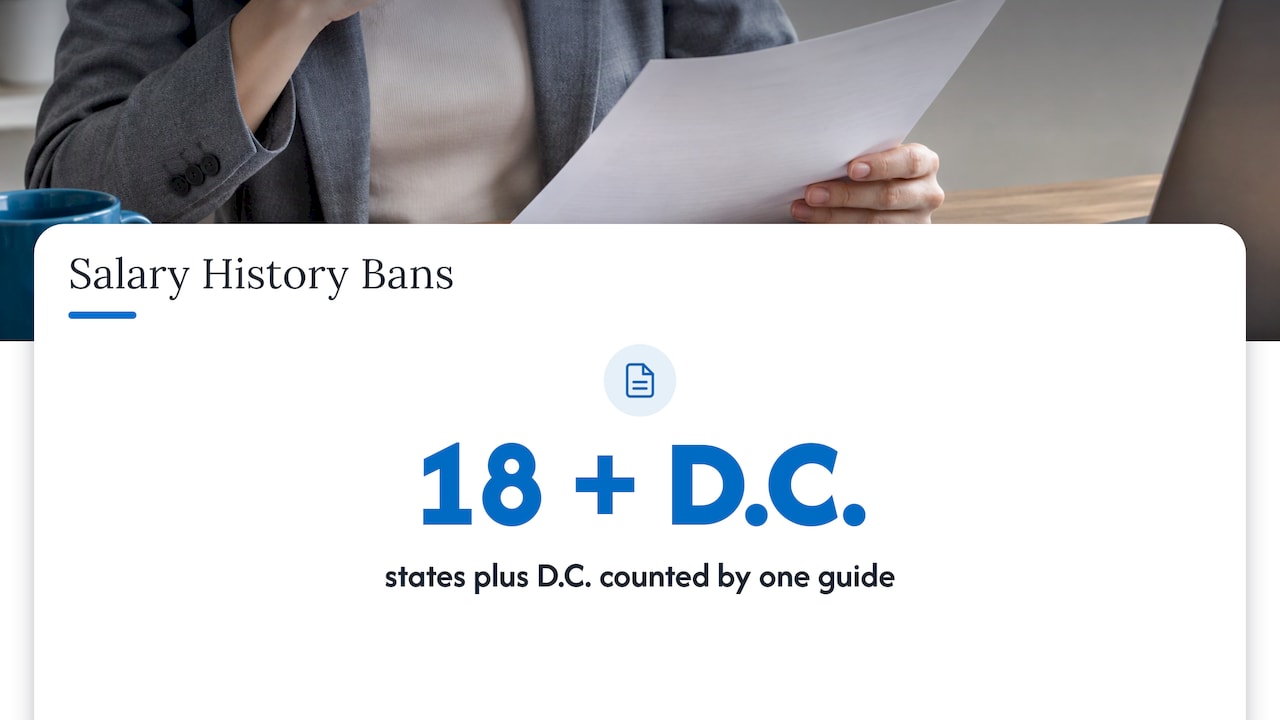
One 2026 guide counts 18 statewide salary history ban states plus D.C., including California, Colorado, Connecticut, Delaware, Hawaii, Illinois, Maine, Maryland, Massachusetts, Nevada, New Jersey, New York, Oregon, Rhode Island, Vermont, Virginia and Washington. It also notes Virginia’s law takes effect July 1, 2026. Counts differ between trackers depending on what each one treats as a statewide ban, so verify your state with its labor agency.
What a ban usually covers
Washington’s statute is a useful model. It says employers may not seek the wage or salary history of an applicant from the applicant or a current or former employer, or require that history to meet criteria, subject to limited confirmation rules. Other states draw the lines in their own ways, such as whether you can volunteer the information.
Salary history versus salary expectations
These are different questions. Salary history bans generally cover what you previously earned, not what you expect to earn going forward. So an interviewer asking about your target range may be within the rules even in a ban state, while “What did you make at your last job?” often is not. If you are asked, you can answer with your expectations and a market range you have researched.
Can your employer tell you not to discuss your pay?
In most private workplaces, no. The National Labor Relations Board states that employees covered by the National Labor Relations Act have the right to discuss wages, and policies that prohibit or chill those discussions are unlawful. Retaliation, interrogation, threats, surveillance, and rules that require employer permission before discussing wages are also unlawful, according to the Board.
That protection matters alongside posted ranges. A posted range tells you the band. A conversation with a coworker tells you where people actually sit within it. Coverage under the Act has limits, for example some supervisors and certain categories of workers are not covered, so if you are unsure whether you are protected, see our guide to common employer labor law violations or speak with an employment attorney.
How to use a posted range in your own job search
A posted range is information you can act on. A few practical steps:
- Read the whole posting. Look for the range, the description of benefits and other compensation, and whether it applies to your location or to remote work.
- Compare it to your experience. Ranges often span a wide band. Think about where your skills and responsibilities place you, and be ready to explain why.
- Negotiate with the range as your anchor. You know the employer’s own stated limits, so you can ask for a figure you can justify.
- Ask about the rest of the package. Benefits and other compensation are part of what many laws require employers to describe.
- Save a copy. Take a screenshot or save the page. If the posting changes or disappears, you will have a record.
- Ask about internal moves. Many laws extend to promotions and transfers, so request the range when you are offered one.
If you are already employed and suspect you are paid below peers, our overview of wage theft signs you should document shows what records to keep, and our employee rights guide gives the wider legal picture.
What to do when an employer breaks the rules
Remedies depend on the state. Washington gives a clear picture of what enforcement can look like.
- Where to complain: An applicant or employee may file an administrative complaint or bring a civil action over a pay disclosure violation.
- What you may recover: A prevailing applicant or employee may receive statutory damages of $100 to $5,000 per violation, plus reasonable attorneys’ fees and costs. The statute sets a three-year deadline for a civil action.
- Agency penalties: Under Washington’s administrative rules, if a violation is cited and not resolved, the department may order statutory damages of between $100 and $5,000 per violation.
- What counts as a violation: Washington’s Department of Labor and Industries says applicants may file a complaint if an employer sought wage history or left the range, benefits and other compensation out of a posting. The complaint form also covers retaliation.
For wage-discussion violations, the NLRB indicates a charge may be filed with the Board if an employer interferes with protected rights.
These figures describe Washington. Other states set different damages, fines and deadlines, and some rely mostly on agency enforcement. Find your state labor department’s complaint page, and act promptly, because filing deadlines can be short. Retaliation for raising a concern is a separate violation in many places, so write down dates, names and what was said.
If you need a lawyer, an employment attorney can tell you which state and federal claims fit your facts. Our attorney directory is built for that search, and our guide to at-will employment rights explains where legal protection ends and where it begins.
Perspective
We have spent three decades linking the knowledge of employment rights attorneys with the people who most need it: workers. Pay transparency fits that mission closely. A pay range is a small piece of information with large effects. It gives a job seeker a fair starting point, it gives a current employee a way to ask a better question, and it makes unexplained gaps visible.
The patchwork is the hard part. A worker in one state gets a posted range, and a worker across the border may get nothing. That is why plain-language information matters. People should not need a law degree to learn whether the employer in front of them is following the rules, or what to do if it is not.
We encourage every worker to read the posting, save a copy, ask the question and keep records. And we encourage every organization to treat disclosure as a step toward equitable workplaces, not only a compliance task. Free, jargon-free guidance is what we offer, and your support through membership keeps it that way.
Max
Support free guidance on your rights
If this guide helped you understand your options, you can help keep this kind of information free for the next worker who searches for it. Our membership starts from $25 per year and supports plain-language resources on pay, discrimination and employment law.

You can also keep reading on our site for guides on wages, workplace safety and finding an employment attorney.
FAQ
Which states have pay transparency laws?
As of August 1, 2026, 16 states plus Washington, D.C., had statewide laws in effect, with Delaware’s scheduled for September 26, 2027. Some cities and counties have local rules too. Check your state labor department’s site for the current list and details.
Can an employer ask for my salary history?
In states with salary history bans, generally not, though the exact rules vary. Washington, for example, bars employers from seeking an applicant’s wage history from the applicant or a past employer, with limited confirmation exceptions. In a state without a ban, the question may be allowed, and you can choose to answer with your expectations instead.
Does a salary range have to appear in every job posting?
Not everywhere. In Washington, each posting for an employer with 15 or more employees must include the range or fixed wage and a description of benefits. Other states apply the rule at different points: Connecticut ties disclosure to the applicant’s request or the first pay discussion. Employer size, remote work and internal postings can change the answer.
Can my employer forbid me from talking about my pay?
For most private-sector employees, no. The NLRB says covered employees have the right to discuss wages, and policies that prohibit or chill those discussions are unlawful. If your employer interferes, you may be able to file a charge with the NLRB.
What can I do if a posting leaves out the required range?
Save the posting, note the date, and look up your state’s complaint process. In Washington, you can file a complaint with the Department of Labor and Industries or bring a civil action. Elsewhere, remedies differ, so consider speaking with an employment attorney.
Sources
- 16 States + DC Have Pay Transparency, What Does That Mean? (National Law Review)
- A running list of states and localities that require pay range disclosure (HR Dive)
- Chapter 49.58 RCW, Washington Equal Pay and Opportunities Act (Washington State Legislature)
- Chapter 296-123 WAC (Washington State Legislature)
- Equal Pay & Opportunities Act Complaint Form (Washington L&I)
- Your Right to Discuss Wages (National Labor Relations Board)
- Salary History Ban States List (Reveal Background)