Most domestic workers in the United States are covered by federal minimum wage and overtime protections under the Fair Labor Standards Act, with a handful of narrow exemptions for companionship and live-in work. Many states add further protections through Domestic Workers’ Bills of Rights covering contracts, rest days, and paid sick leave. If you take one step today, document your hours and ask your employer for a written agreement, then reach out to the Department of Labor, your state labor agency, or Workplace Fairness for guidance.
TL;DR:
- Federal law sets a $7.25 minimum and time and a half after 40 hours weekly; live in workers retain minimum wage, but overtime rules differ.
- The Wage and Hour Division suspended enforcement of the 2013 companionship rule in 2025, so check current guidance before assuming an exemption removes your protections.
- New Jersey requires written contracts for workers employed five or more hours monthly and protects them regardless of immigration status; model language is publicly available.
- Your job title does not determine FLSA status: employer control over schedules, tools, and supervision can indicate employee status, even when a contract says otherwise.
- Federal law does not guarantee meal or rest breaks, and OSHA generally does not inspect private homes; state protections and workers’ compensation may still apply.
Table of Contents
- Key rights at a glance for domestic workers
- Federal rules that matter: FLSA coverage, exemptions, and hours worked
- State and local protections expand what federal law covers
- Contracts, pay practices, and wage theft: what to demand
- Classification, discrimination, safety, and retaliation protections
- How to assert your rights: a step-by-step action plan
- Rights to rest breaks, meal breaks, and paid time off
- Health and safety protections specific to domestic workers
- Protections related to working hours and mandatory days off
- Workers’ compensation and unemployment benefits eligibility
- Access to social security and other benefits for domestic workers
- Family and medical leave rights for domestic workers
- Why we built this resource for domestic workers
- Get more support through Workplace Fairness
- FAQ
- Sources
Key rights at a glance for domestic workers
Before diving into the legal detail, it helps to see where you stand. The checklist below covers the basics most domestic workers need to verify their status and protect themselves.
- You are generally entitled to federal minimum wage and overtime pay under the FLSA, though companionship and live-in roles carry specific exemptions.
- Your state may add rights federal law does not cover, including written contracts, rest days, and paid sick leave.
- Keep your own timesheets, texts, and pay records. Employer records are not always reliable, and yours may be the evidence that wins a claim.
- If something feels wrong, you can file with the Department of Labor’s Wage and Hour Division or your state labor department; additional guidance is available from various workplace rights organizations.
Federal rules that matter: FLSA coverage, exemptions, and hours worked
The federal baseline starts with the Fair Labor Standards Act. Under the FLSA, most domestic service workers are entitled to at least the federal minimum wage of $7.25 per hour and overtime pay at time and a half for hours worked over 40 in a week, and live-in workers remain entitled to minimum wage even though overtime rules for them differ. Whether you count as an employee under this law depends on employer control: who sets your schedule, supplies your tools, and supervises your work. Misclassifying a worker as an independent contractor is a common tactic employers use to sidestep these obligations, so understanding your actual working relationship matters as much as your job title.
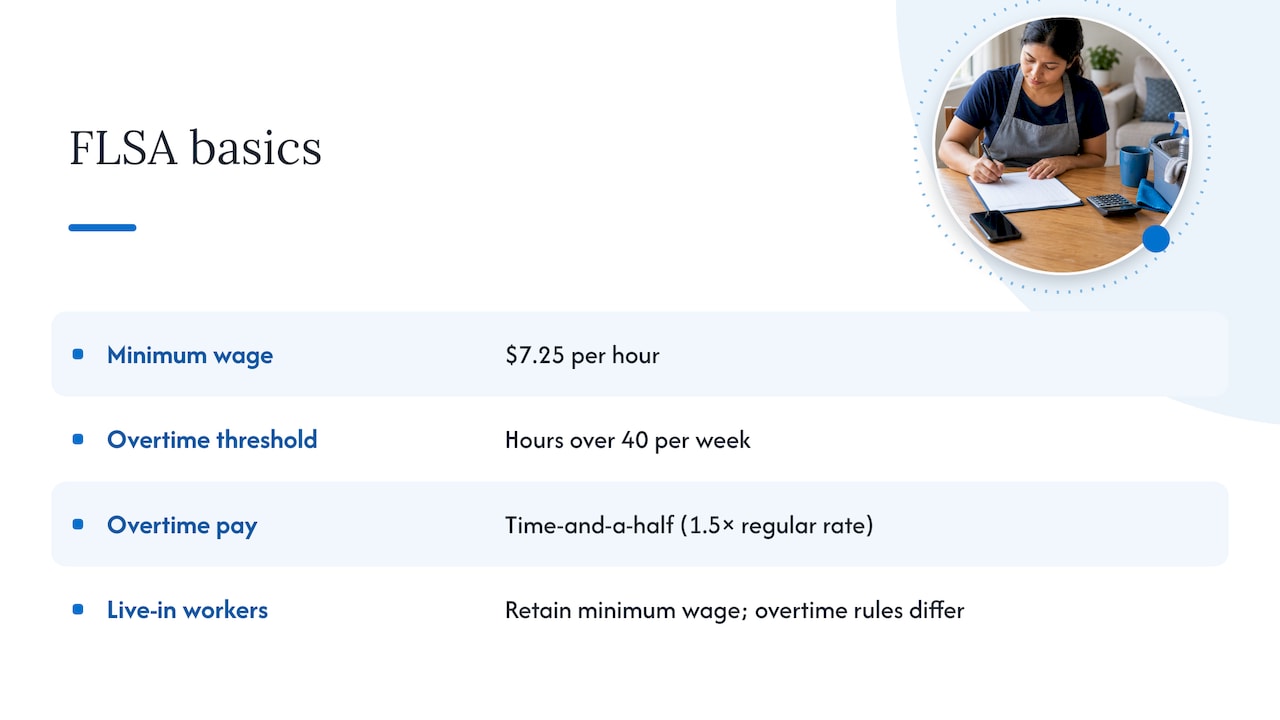
Two exemptions cause the most confusion. The FLSA excludes casual babysitters and certain companionship workers from some protections, and it carries a limited overtime exemption for live-in domestic employees, though these exemptions are narrowly defined. The Department of Labor’s fact sheets also explain how “hours worked” is calculated, including engaged-to-wait time, sleep time, and travel between job sites. In 2025, the Wage and Hour Division issued enforcement guidance, FAB 2025-4, suspending enforcement of the 2013 final rule while the companionship and live-in exemptions are re-evaluated. That shift widens how those exemptions are applied in practice until new rulemaking concludes, so it’s worth checking current guidance before assuming you fall outside protection. Your employer is expected to keep accurate records of your hours and pay, and asking to see them, or keeping your own, gives you the proof you need if a dispute arises.
State and local protections expand what federal law covers
Federal law sets a floor, not a ceiling, and a growing number of states have passed their own Domestic Workers’ Bills of Rights to close the gaps. These laws typically add mandatory written contracts, guaranteed rest days, paid sick leave, and protections against harassment that the FLSA does not address directly.
New York’s Domestic Workers’ Bill of Rights guarantees overtime and rest day rules, paid rest days after a year of employment, and anti-harassment protections, and it has served as a model for other states. New Jersey’s version requires written contracts for workers employed five or more hours a month, protects workers regardless of immigration status, and publishes model contract language you can adapt for your own agreement. Illinois and Massachusetts have enacted similar protections, though the specific provisions, such as notice periods or sick leave accrual rates, vary from state to state. Because the rules differ so much by location, your first move should be checking your own state labor department’s website or searching for a domestic worker bill of rights specific to where you work.
Contracts, pay practices, and wage theft: what to demand
A written agreement is the single most effective tool for preventing disputes in domestic work, since so much of it happens behind closed doors with no outside witness. Your contract should spell out your hourly rate or salary, scheduled hours, specific duties, overtime terms, payment frequency, and any housing or transportation arrangements if your employer provides them.
Reliable records protect you if a disagreement turns into a wage claim:
- Keep your own timesheets rather than relying solely on an employer’s log.
- Photograph calendars, schedules, or posted hours whenever they change.
- Save text messages and emails that mention pay, schedule changes, or duties.
- Keep bank statements or pay stubs showing what you actually received.
Watch for warning signs like being paid a flat rate regardless of hours worked, unexplained deductions from your pay, or being asked to work off the clock. If you suspect wage theft, our guide to wage theft warning signs walks through what to document. Both the Department of Labor and state agencies can order back pay and penalties once a violation is confirmed.
Classification, discrimination, safety, and retaliation protections
How you’re classified, employee or independent contractor, shapes nearly every right discussed here. The real test is control: if your employer sets your hours, directs how you perform tasks, and supervises your work, you likely qualify as an employee regardless of what a contract calls you.
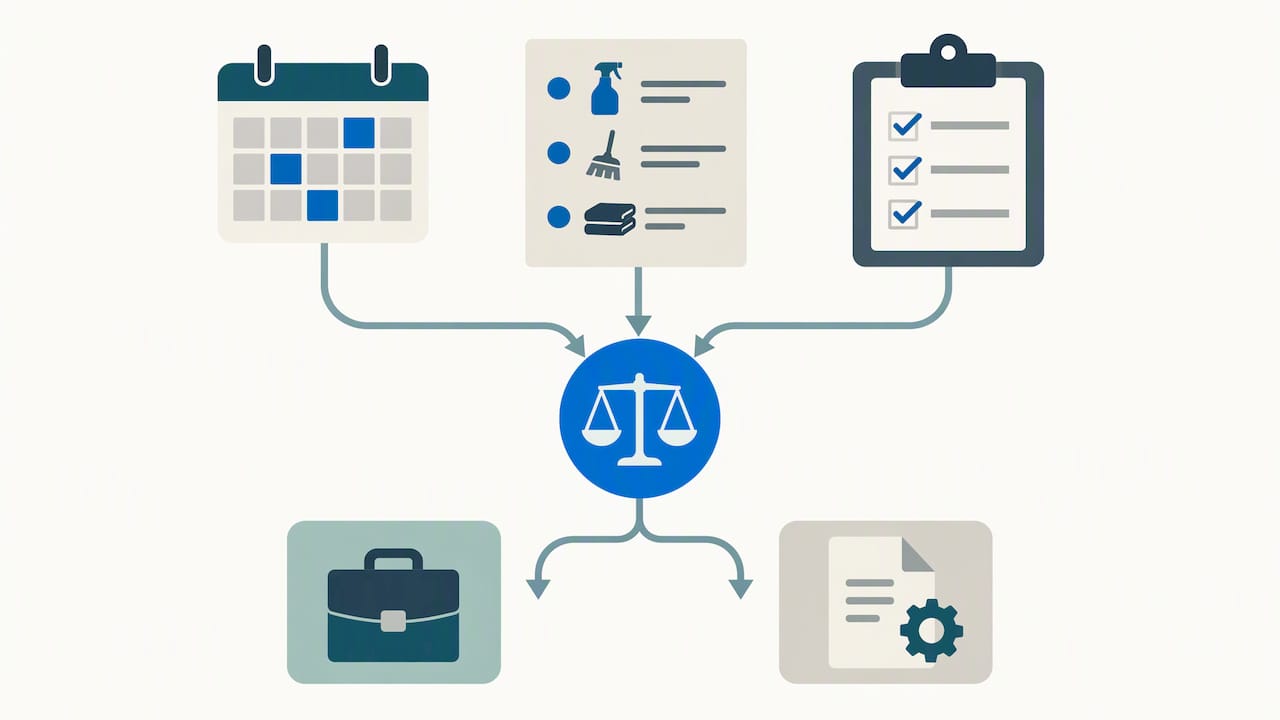
Federal anti-discrimination laws, including Title VII, the ADA, and the ADEA, can apply to domestic workers depending on employer size and circumstances. The EEOC has issued guidance making clear that discrimination tied to caregiving responsibilities, including bias based on sex, race, national origin, or pregnancy, can amount to unlawful disparate treatment. On safety, federal OSHA generally does not inspect private homes for ordinary household tasks, which limits that enforcement path, though state remedies and civil claims may still apply. If you report a violation and face retaliation, that retaliation itself is typically unlawful, and documenting dates, conversations, and changes in treatment afterward strengthens any later claim.
How to assert your rights: a step-by-step action plan
Knowing your rights matters less than knowing how to use them. Here’s a practical sequence if you believe your rights have been violated.
- Document everything. Save hours worked, duties performed, pay received, and any texts or emails about your job, starting now rather than waiting until a dispute escalates.
- Request a written agreement. Ask directly: “Can we put our work agreement in writing, covering my hours, pay, and duties?” A written record protects both sides and removes ambiguity.
- Choose where to file. Options include the Department of Labor’s Wage and Hour Division for wage and overtime claims, your state labor department for state-specific protections, and the EEOC or a state human rights agency for discrimination. Free legal aid clinics can also advise you on which path fits your situation, and our overview of labor standards enforcement explains how these agencies typically respond.
- Expect specific remedies. Wage claims can result in back pay and penalties, though timelines vary by agency and caseload. If your employer retaliates after you file, document the retaliation separately since it may support an independent claim.
Pro Tip: Package your complaint with a short written timeline, copies of your records, and the names of anyone who witnessed key events. Agencies move faster on complaints that are organized and specific.
Rights to rest breaks, meal breaks, and paid time off
Federal law does not guarantee domestic workers meal or rest breaks, which surprises many people. The FLSA sets minimum wage and overtime rules but stays silent on breaks during the workday, leaving that gap to be filled by state law or individual agreement.
This is where state Domestic Workers’ Bills of Rights do real work. New York’s law, for example, guarantees paid rest days after a year of continuous employment with the same employer, alongside overtime protections. Other states with similar statutes build in comparable rest day guarantees, though the specifics, like how many hours constitute a rest day or how soon they accrue, differ from state to state.
If your state doesn’t mandate breaks or paid time off, your best protection is a written contract that specifies them. Spell out whether you get a lunch break, how many paid or unpaid days off you’re entitled to, and what happens if you’re asked to work through a scheduled break. Without that written understanding, you’re relying entirely on your employer’s good faith, which is a weak position if a dispute ever arises. If your employer already offers paid time off verbally, ask to have it documented, since verbal promises are difficult to enforce without evidence.
Health and safety protections specific to domestic workers
Health and safety protections for domestic workers look different from those covering most other employees, mainly because federal OSHA generally does not inspect private homes for routine household tasks. That means the usual workplace safety enforcement most employees rely on often does not extend to a private residence where domestic work takes place.
This gap does not leave you without options. If you’re injured on the job, workers’ compensation may still apply depending on your state and your employer’s coverage, which is a separate system from OSHA enforcement. Some states have also begun extending specific safety requirements to domestic employment through their own labor laws, even where federal OSHA does not reach.
Practical safety steps still matter. Ask your employer about any chemicals or equipment you’ll be expected to use, and request basic safety information rather than assuming it will be provided. If you’re hurt on the job, document the incident in writing as soon as possible, including what happened, when, and whether you sought medical care. That record becomes essential if you later pursue a workers’ compensation claim or need to show a pattern of unsafe conditions. Because enforcement channels are limited compared to other industries, keeping your own documentation is often your strongest safeguard.
Protections related to working hours and mandatory days off
Working hours for domestic workers are shaped more by state law and individual contracts than by a single federal standard. The FLSA requires overtime pay after 40 hours in a workweek for most domestic workers, but it does not cap the total number of hours you can be asked to work in a day or week.
Mandatory days off are where state Domestic Workers’ Bills of Rights fill the gap. New York’s law guarantees paid rest days after a year with the same employer, a protection that exists specifically because federal law stays silent on the issue. States without a comparable statute leave this entirely to negotiation, which makes a written contract your most reliable tool for securing a guaranteed day off.
If you’re a live-in worker, hours worked calculations get more complicated. The Department of Labor’s guidance addresses how sleep time and on-call periods factor into your total hours, distinguishing between time you’re actively engaged to wait versus time you’re fully relieved from duty. Understanding that distinction matters if you believe you’re being shorted on overtime pay, since sleep time can sometimes be excluded from compensable hours under specific circumstances described in federal guidance. When in doubt about how your hours are being counted, ask your employer directly and keep your own log to compare against theirs.
Workers’ compensation and unemployment benefits eligibility
Eligibility for workers’ compensation and unemployment benefits varies more for domestic workers than for almost any other category of employee, largely because state laws differ on whether household employers are required to carry coverage at all.
Workers’ compensation typically covers medical costs and lost wages if you’re injured while performing your job duties, but whether your employer is required to carry this coverage depends on your state and sometimes on how many hours you work or how many employees your employer has. Some states exempt small household employers from mandatory coverage, which means you may need to ask directly whether your employer carries a policy.
Unemployment benefits follow a similar pattern. Eligibility generally depends on whether your employer paid into the state unemployment insurance system on your behalf, which not all household employers do consistently, especially if you were paid informally or in cash. If you’re classified as an independent contractor rather than an employee, you likely won’t qualify for either benefit, which is another reason correct classification matters so much. If you’re unsure where you stand, contacting your state’s labor department directly is the clearest way to confirm whether coverage exists in your specific case.
Access to social security and other benefits for domestic workers
Social security benefits depend on a simple mechanism: whether your employer reports your wages and pays the required payroll taxes. If you’re paid off the books, meaning no taxes are withheld or reported, you won’t accumulate the work credits needed to qualify for social security retirement or disability benefits later.
This creates a real incentive to insist on proper wage reporting, even though some employers prefer informal cash arrangements because it’s simpler for them. Being paid on the books protects your long-term eligibility for benefits that take years to build, and it also supports your ability to prove income if you ever apply for housing, loans, or other benefits that require documented earnings.
Beyond social security, other benefits like Medicare eligibility are tied to the same payroll tax contributions. If you’ve been paid informally for years, you may have gaps in your work record that affect your eventual benefits. Asking your employer to report your wages properly from the start, or correcting the practice as soon as you recognize it, protects you far more than any single paycheck in isolation.
Family and medical leave rights for domestic workers
Family and medical leave protections for domestic workers depend heavily on employer size and state law, since the federal Family and Medical Leave Act only covers employees at workplaces with 50 or more employees within a certain radius, a threshold almost no individual household employer meets.
This means most domestic workers employed directly by a family are unlikely to qualify for federal FMLA protections. Some states have stepped in with their own paid family and medical leave programs that apply more broadly, sometimes regardless of employer size, so checking your state’s specific program matters more than assuming federal law applies. If you want to understand the federal eligibility tests in more depth, our guide to FMLA eligibility breaks down the thresholds that typically exclude most household employees.
Where state paid leave programs exist, they’re often funded through payroll contributions similar to unemployment insurance, which again ties back to whether your wages are properly reported. If your state offers paid family leave and your employer has been reporting your pay correctly, you may have access to benefits that federal law alone would not provide. Asking your state labor department directly is the most reliable way to confirm what applies to your situation.
Why we built this resource for domestic workers
We started in 1994 as the National Employee Rights Institute, and we changed our name to Workplace Fairness in 2001 to better reflect the work of connecting employment rights attorneys with everyday workers and advocates. Our free guides, explainers, and templates are built to complement official government pages, translating dense legal language into something you can actually use.
— Max
Get more support through Workplace Fairness
Understanding your rights is the first step, and we offer ways to go deeper when you need more than a free guide. Our membership starts at $25 per year and gives you access to expanded guides, contract templates, and updates as labor laws change in your state.
If you work in caregiving and want structured training on managing stress in high-demand roles, our Burnout First Aider Certification is designed specifically for that work. For situations that call for legal representation, attorney directories can connect you with employment lawyers who handle wage, discrimination, and retaliation claims in your area.
- Membership gives you ongoing access to templates and guides as laws change.
- The Burnout First Aider Certification offers training built for caregivers managing high-stress work.
- Our attorney directory connects you to employment lawyers when a case needs legal representation.
Start with our membership page to see which level of support fits what you’re dealing with right now.
This article is general information, not a substitute for advice from a qualified lawyer. Consult a qualified legal professional about your own circumstances before acting on anything here.
FAQ
What are the rights of a domestic worker?
Domestic workers are generally entitled to federal minimum wage and overtime pay under the FLSA, with specific exemptions for companionship and live-in work. Many states add further rights through Domestic Workers’ Bills of Rights, including written contracts, rest days, and paid sick leave, so checking your own state’s rules matters.
What are the three most important HR laws?
For domestic workers specifically, the most relevant protections come from the Fair Labor Standards Act governing wages and overtime, the EEOC’s guidance on caregiver-related discrimination, and state-level Domestic Workers’ Bills of Rights like New York’s. Together these cover pay, discrimination, and the contract and rest protections federal law leaves out.
What was the Supreme Court’s decision on domestic workers?
There is no single, defining Supreme Court decision specific to domestic workers’ rights referenced in current federal guidance. Current protections instead come primarily from the FLSA’s statutory provisions and Department of Labor enforcement guidance, including the recent suspension of the 2013 companionship exemption rule.
What are women’s rights at work?
Women in domestic work are protected against discrimination based on sex, pregnancy, and caregiving-related stereotypes under EEOC guidance addressing unlawful disparate treatment tied to caregiving responsibilities. These protections apply alongside the wage, overtime, and state-level contract rights available to all domestic workers regardless of gender.
Sources
- Fact Sheet #79B: Live-In Domestic Service Workers Under the Fair Labor Standards Act (FLSA) | U.S. Department of Labor
- Enforcement guidance on unlawful disparate treatment of workers with caregiving responsibilities | EEOC
- Domestic Workers’ Bill of Rights | New York Department of Labor