
If you’re missing overtime pay, working off the clock, seeing a paystub that doesn’t add up, or losing tips your employer never disclosed, you’re likely looking at wage theft, not a payroll accident. The moment you spot even one of these patterns, start documenting: save every schedule, message, and paystub. Wage theft is illegal under federal and state law, and the Department of Labor and your state labor office both accept complaints once you have proof in hand.
TL;DR:
- Most wage theft cases involve systematic issues like unpaid overtime, illegal deductions, or misclassification, not isolated payroll errors.
- Document your work hours, paystubs, and related communications diligently, especially noting any unexplained deductions or unpaid tasks.
- Comparing your logged hours with your paystub is crucial; discrepancies in overtime pay or final wages often indicate violations.
- Wage theft costs workers in large states billions annually, disproportionately affecting low-wage, tipped, and care workers.
- Start with a written request for correction to your employer before filing complaints with federal or state labor agencies.
Table of Contents
- Key Signs of Wage Theft to Watch For
- How to Audit Your Pay and Build Evidence
- Which Laws and Agencies Cover Your Paycheck
- What to Do Next if You Suspect Wage Theft
- How Common Is Wage Theft, and Who Gets Hit Hardest?
- The Workplace Fairness Perspective: What Employees Miss
- Get Help Building Your Wage Theft Case
- Sources
- FAQ
Key Signs of Wage Theft to Watch For
Wage theft rarely announces itself. It shows up as a rounding error on a paystub, a manager who asks you to “just finish up” after clocking out, or a tip jar that never quite matches what customers actually left. State and federal labor offices point to a consistent set of warning signs including unpaid overtime, missing paystubs, illegal deductions, and tip theft, and once you know the pattern, it’s much easier to spot in your own pay history.
Here are the signs that show up most often in actual wage theft examples:
- Unpaid or miscalculated overtime. If you work more than 40 hours in a week and your pay doesn’t reflect time and a half for those extra hours, that’s a direct violation, not a rounding issue.
- Off-the-clock work. Being asked to set up, clean up, answer messages, or finish tasks after clocking out means you’re working unpaid, even if it’s only 10 or 15 minutes a shift.
- Missing or inaccurate paystubs. No paystub at all, or one that doesn’t show your hours, rate, or deductions clearly, is one of the clearest signs of unpaid wages and often a sign employers are hiding something.
- Misclassification. Being labeled an “independent contractor” while your employer sets your schedule and supervises your work, or being called “exempt” from overtime when your duties don’t qualify, strips you of pay you’re legally owed.
- Tip theft. Illegal tip pools that include managers, or employers who pocket a share of tips outright, violate federal tip-credit rules.
- Delayed or partial final pay. Getting your last paycheck late, short, or not at all after quitting or being let go is a common and often illegal practice.
- Unpaid trial shifts and automatic meal-break deductions. Working a “trial” shift for free, or having 30 minutes deducted for a lunch break you never actually got to take, both count as unpaid work hours.
Any one of these on its own is worth investigating. Two or three together usually means the pattern is systemic rather than accidental.
How to Audit Your Pay and Build Evidence
Catching wage theft comes down to comparing what you actually worked against what you were actually paid, and doing it consistently enough that the pattern becomes undeniable.
- Log your hours every shift. Write down the date, start and end time, any unpaid tasks you performed, and who asked you to do them.
- Compare your log to your paystub. Multiply your hourly rate by hours worked, add time and a half for anything over 40 hours that week, and check whether the number on your paystub matches your math.
- Check every paystub field. Your employer’s legal name, your hourly rate, total hours, and every deduction should be listed clearly. If deductions appear without explanation, ask for an itemized breakdown in writing.
- Collect supporting records. Save schedules, texts or emails asking you to work extra, photos of posted schedules, bank deposit records, and tip logs if you’re a tipped employee.
- Ask your employer to correct it, in writing. A simple message like “My timesheet shows 44 hours for the week of [date], but my pay reflects only 40. Can you correct this?” creates a paper trail even if they never respond.
Pro Tip: Keep a copy of everything outside your work email or work phone. Employers can revoke access to company systems the moment they suspect you’re building a case, and screenshots saved to your own device are worth far more than records you might lose access to.
Employers sometimes split payroll across multiple entities or misclassify workers specifically to make hours harder to trace, so note every legal name your paycheck comes from.
Which Laws and Agencies Cover Your Paycheck
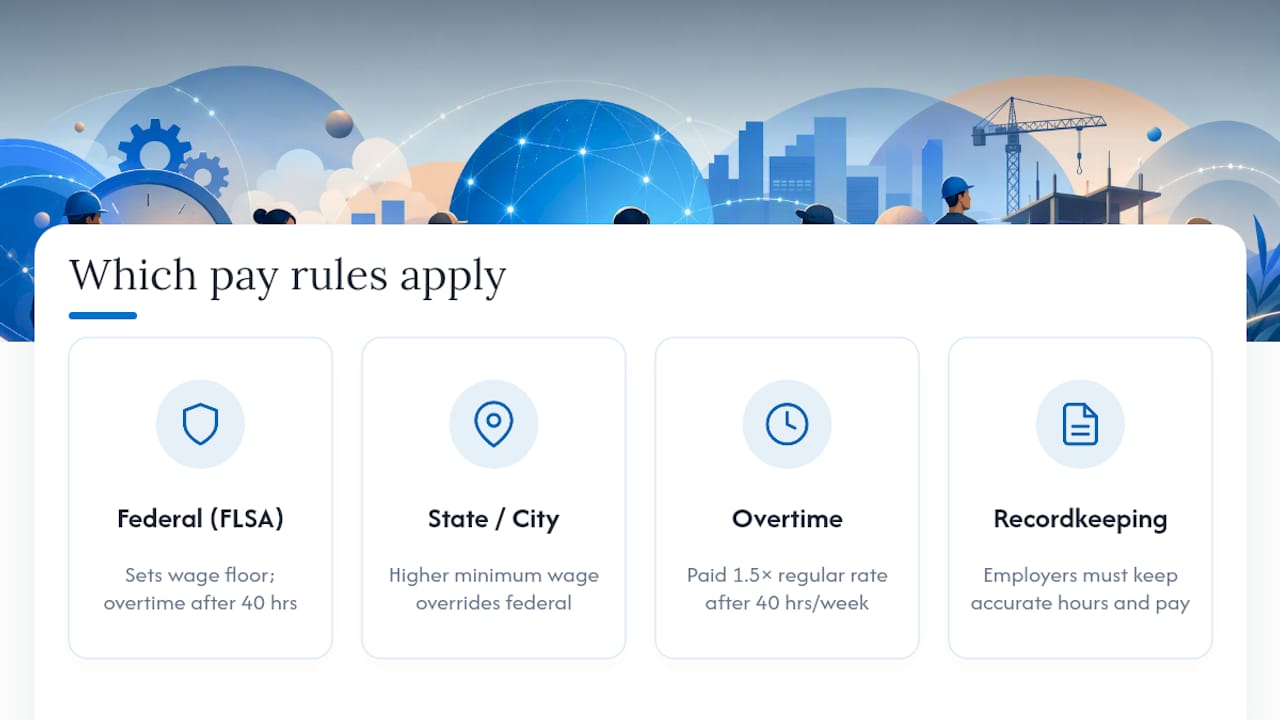
The Fair Labor Standards Act sets the floor: a federal minimum wage, overtime pay at 1.5 times your regular rate after 40 hours in a workweek, and a legal requirement that employers keep accurate records of your hours and pay. When your state or city sets a higher minimum wage, your employer owes you that higher rate, not the federal minimum.
The Department of Labor’s Wage and Hour Division investigates federal violations and can order back pay across state lines, while your state labor office or attorney general often handles state-specific violations like paystub requirements or final-pay deadlines that the FLSA doesn’t cover. State labor departments frequently publish their own pay-stub and final-pay timing rules, so check your state’s page for exact deadlines before you file anywhere. Curious how overtime math actually works? Our overtime rights guide breaks down exemptions and edge cases in plain language.
What to Do Next if You Suspect Wage Theft
Start with the least formal option and escalate only if it doesn’t work.
- Ask your employer to fix it first, in writing, and keep a copy of every message you send and every response (or non-response) you get.
- File a complaint with the DOL Wage and Hour Division or your state labor office. Federal complaints work well for FLSA violations like overtime; state agencies often move faster on paystub and final-pay issues.
- Check your state’s statute of limitations. Lookback periods vary significantly by state, so confirm your deadline before you wait too long to file.
- Consider small claims court or an attorney for larger claims or complicated misclassification cases, weighing the cost of legal help against your likely recovery.
- Understand what agencies typically deliver. Investigations commonly result in back pay, and sometimes liquidated damages or penalties against the employer, though timelines can run months.
Our step-by-step overtime claim guide walks through exactly what filing looks like from start to finish.
How Common Is Wage Theft, and Who Gets Hit Hardest?
Wage theft isn’t a fringe problem. It’s a routine cost of doing business for a meaningful share of American employers.
Workers in the 10 most populous U.S. states lose an estimated $8 billion a year to minimum wage violations alone, a figure that extrapolates to more than $15 billion nationwide.
Unpaid overtime makes up the largest share of what federal investigators actually recover, though the median amount recovered per case tends to be modest, which is exactly why documentation matters before you file. Tipped workers, care workers, and other low-wage employees face disproportionate exposure, which makes the effort of logging your hours worth far more than it might feel like in the moment.
The Workplace Fairness Perspective: What Employees Miss
The single most useful thing you can do is keep contemporaneous records. Employers who shave time, split payroll across entities, or misclassify workers rely on employees not tracking their own hours. A simple daily log, kept outside company systems, often does more to recover pay than any complaint filed without it. Our off-the-clock work guide covers exactly what that documentation should look like.
— Max
Get Help Building Your Wage Theft Case
This resource provides free, plain-language information as an alternative to sifting through legal jargon on your own. Every guide on unpaid overtime, misclassification, and final pay is written for employees, not lawyers, and it costs nothing to read.

If your situation involves misclassification, our exempt vs. nonexempt breakdown explains what your job title actually means under the law. For claims that need more than documentation, an attorney directory referral can connect you with employment lawyers who handle wage cases directly. And if you want to support the free resources that helped you build your case, Workplace Fairness membership starts at $25 a year and keeps this information free for the next worker who needs it. Start by reading the guide closest to your situation, then decide whether your next step is a complaint, a lawyer, or both.
This article is general information, not a substitute for advice from a qualified lawyer. Consult a qualified legal professional about your own circumstances before acting on anything here.
Sources
- What is Wage Theft? – Department of Labor (NY)
- Employers steal billions from workers’ paychecks each year – EPI
- Wage Theft in America: Recovered back wages analysis – Settlement Insight
FAQ
What Are the Signs of Wage Theft?
The clearest signs are missing or miscalculated overtime, off-the-clock work, missing paystubs, illegal deductions, tip theft, and delayed final pay. State and federal labor pages list these as the most common warning signs employers use to shortchange workers.
How Common Is Wage Theft in the U.S.?
It’s widespread. Researchers estimate workers in the 10 largest states lose about $8 billion a year to minimum wage violations alone, with the national total likely exceeding $15 billion.
Which States Have Wage Theft Laws?
Every state operates under the federal FLSA floor, but many states, including those with active wage theft units like Colorado, add stronger paystub and final-pay requirements. Check your state labor office’s page for the exact rules that apply to you.
How Do I Check for Wage Theft?
Compare your logged hours against your paystub every pay period, checking that overtime is paid at time and a half after 40 hours. Save schedules, messages, and bank deposits as backup, and flag any deduction your employer can’t explain in writing.
What Should I Do First if I Suspect Wage Theft?
Start documenting immediately: log your hours, save your paystubs, and keep any messages about extra work. Then ask your employer in writing to correct the pay before filing a complaint with the DOL Wage and Hour Division or your state labor office.