
Quid pro quo harassment happens when someone with authority over your job ties a benefit or a penalty to sexual submission, and it is illegal in the United States under Title VII whenever that submission or rejection affects an employment decision, according to EEOC guidance. When a supervisor’s demand results in a firing, demotion, or denied promotion, employer liability typically follows without much room for dispute.
TL;DR:
- Unlike hostile environment claims, quid pro quo claims do not require severe or pervasive conduct; one incident can suffice when tied to a job decision.
- If your supervisor is involved, report through HR, a higher level manager, or an ethics line, and keep dated notes and copies outside work systems.
- Federal filing deadlines are generally 180 days, or 300 days in qualifying states, and an internal investigation does not stop the clock.
- Without a tangible employment action, an employer may avoid liability by proving it took reasonable preventive care and you unreasonably ignored available reporting channels.
- After the EEOC closes a charge, its Notice of Right to Sue starts a 90 day federal lawsuit deadline, though state rules may differ.
Table of Contents
- What quid pro quo sexual harassment means in practice
- What quid pro quo looks like on the job
- Why Title VII makes this illegal and who pays for it
- Documenting what happened and what to do first
- What happens after you file an EEOC charge
- When to bring in an employment attorney
- The toll quid pro quo harassment takes on well-being
- Your protections against retaliation after reporting
- How employers can prevent it before it starts
- A clear-eyed note on what this guide can and can’t do
- How Workplace Fairness supports you through this
- FAQ
- Sources
What quid pro quo sexual harassment means in practice
Courts and the EEOC rely on three practical elements to identify quid pro quo harassment:
- Unwelcome sexual conduct, whether a request, comment, touch, or repeated advance.
- A harasser with actual or apparent authority over hiring, firing, pay, or assignments.
- A link between the employee’s response and a job decision, such as a promotion, raise, or termination.
A tangible employment action includes hiring, firing, demotion, a denied bonus, or an unwanted reassignment, all examples the EEOC’s enforcement guidance treats as sufficient to establish harm. The exchange rarely needs to be spelled out. A supervisor who hints that “things could go easier” if you spend time with them outside work is making the same proposition as one who states it directly, and your compliance under pressure is never treated as consent or as a defense for the harasser.
The EEOC’s framework makes clear that quid pro quo is a distinct legal theory from hostile-work-environment harassment, since it hinges on the connection between sexual conduct and a specific employment outcome rather than on the overall severity of the conduct, per EEOC policy guidance.
What quid pro quo looks like on the job
Real workplace situations rarely come labeled, so recognizing the pattern matters more than matching a textbook phrase.
- A manager hints that a promotion depends on accepting repeated dinner invitations, then promotes a less qualified coworker after you decline.
- A salesperson is told a lucrative account or bonus hinges on “getting friendly” with a client, and the account goes elsewhere after the employee refuses, an arrangement the EEOC’s litigation brief in Davenport recognizes as actionable when an employer tolerates it.
- A supervisor threatens to move an employee to a worse shift or location unless they agree to a personal relationship.
A single uncomfortable comment, on its own, is not automatically quid pro quo. What separates it from a hostile remark is the direct tie to something concrete: your pay, your title, your schedule, or your job itself.
Why Title VII makes this illegal and who pays for it
Quid pro quo harassment is a form of sex discrimination prohibited by Title VII, and it is treated differently from hostile-work-environment claims, which require conduct that is severe or pervasive. A quid pro quo claim can succeed based on a single incident if it is tied to an employment decision.
Liability under EEOC enforcement guidance generally depends on what happened next:
- When a supervisor’s harassment results in a tangible employment action, the employer is typically liable automatically, with no additional proof of negligence required.
- When no tangible action occurred, an employer may raise an affirmative defense by showing it took reasonable care to prevent harassment and the employee unreasonably failed to use available reporting channels.
- Remedies can include back pay, reinstatement, and injunctive relief, though outcomes depend heavily on the specific facts and evidence of each case.
For a broader look at how these protections apply across harassment types, our overview of sexual harassment law walks through the legal landscape in plain language.
Documenting what happened and what to do first
Your safety and your evidence matter more than speed. If the person harassing you is your direct supervisor, report through another channel, such as HR, a higher-level manager, or an ethics hotline, since EEOC guidance for employers recognizes that a conflicted reporting line undermines a fair investigation.
Build your record before memory fades:
- Write a dated, factual timeline of every incident, including what was said and who else was present.
- Save emails, texts, voicemails, and performance or pay records that show the timing of any threat or benefit.
- Note witness names and keep copies outside your work email or devices, in case access is cut off later.
Report through your employer’s policy when it is safe to do so, but know that you are not limited to internal channels. You can file with the EEOC or a state agency once you have enough to describe what happened. Federal deadlines are strict: generally 180 days from the last incident, extended to 300 days in states with a qualifying local agency. An internal investigation does not pause this clock.
Pro Tip: Back up your documentation to a personal email account or cloud drive the same day you write it, not weeks later when access to work systems might change.
For a full walkthrough of what to gather, see our guide to documenting workplace harassment evidence.
What happens after you file an EEOC charge
Filing starts a process with predictable stages, even though timing varies by case.
- The EEOC typically notifies your employer soon after a charge is filed, and mediation is sometimes offered as a faster resolution path.
- The agency may investigate, dismiss the charge, or attempt a settlement, and in some cases the EEOC itself pursues litigation.
- Once the EEOC closes its file, it issues a Notice of Right to Sue, starting a 90-day window to bring a federal lawsuit.
State agencies sometimes add their own procedures or timelines, so confirming local rules is worth doing early. Our guide to the complaint process covers what to expect at each stage in more detail.
When to bring in an employment attorney
Legal counsel becomes worth seeking when you face a tangible employment action, retaliation, significant economic harm, or an employer that is stonewalling your complaint. A lawyer can help preserve evidence, clarify your deadlines, and represent you in mediation or litigation if your case proceeds that far.
Consulting an attorney early does not stop you from filing an EEOC charge yourself, and doing both often protects your claim and your timeline at once.
The toll quid pro quo harassment takes on well-being
Being pressured to trade your dignity for your paycheck carries a cost that outlasts the incident itself. Many employees describe a persistent sense of dread before shifts, difficulty concentrating, and a loss of trust in people who are supposed to protect them at work. That strain often follows workers home, affecting sleep, relationships, and confidence in their own judgment.
The psychological weight is compounded by the power imbalance built into quid pro quo situations. When the person controlling your paycheck is also the source of the pressure, the workplace itself starts to feel unsafe, not just uncomfortable. Employees sometimes second-guess routine interactions, wondering whether a normal request carries a hidden expectation.
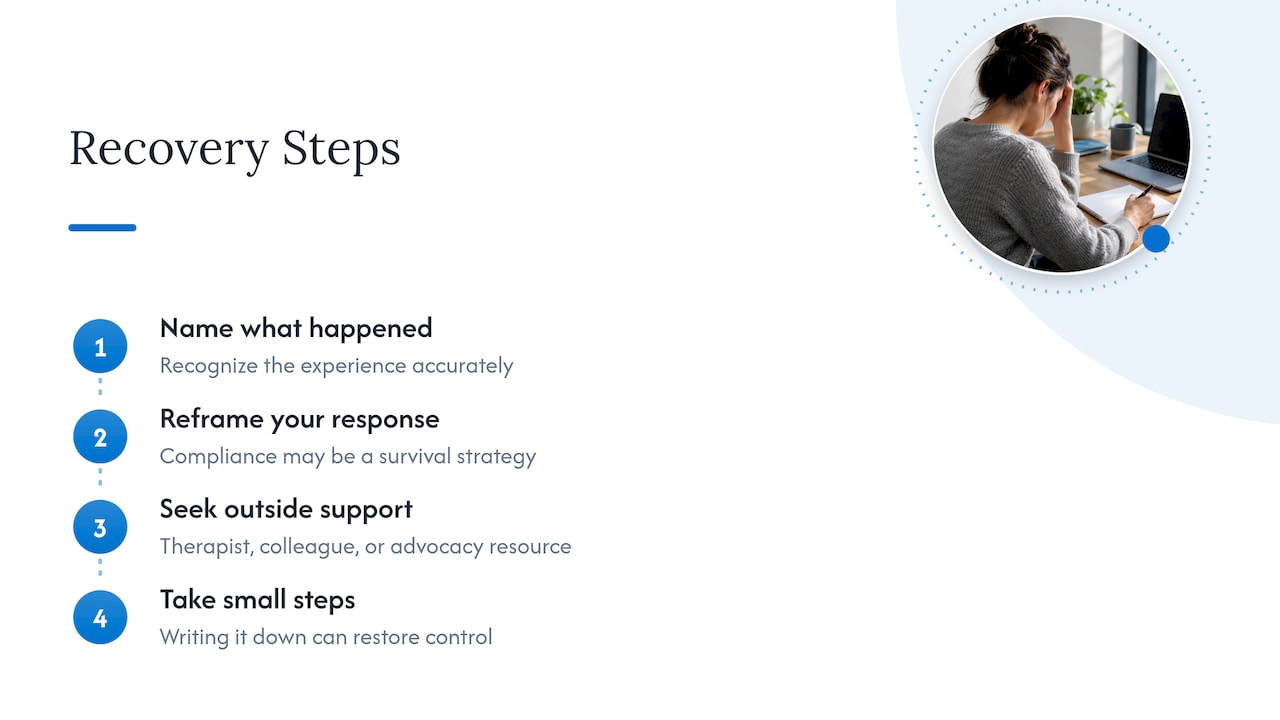
Recovery starts with naming what happened accurately and recognizing that your response under pressure, including any compliance, was a survival strategy rather than a choice freely made. Support from people outside the situation, whether a therapist, a trusted colleague, or an advocacy resource, helps counter the isolation many employees feel when they are weighing whether to report. Addressing the practical and legal path forward, even in small steps like writing down what happened, can restore a sense of control that quid pro quo harassment is specifically designed to take away.
Your protections against retaliation after reporting
Reporting quid pro quo harassment is protected activity under federal law, and retaliating against an employee for doing so is its own separate violation. That protection covers filing an internal complaint, participating in an investigation, or bringing a charge to the EEOC or a state agency.
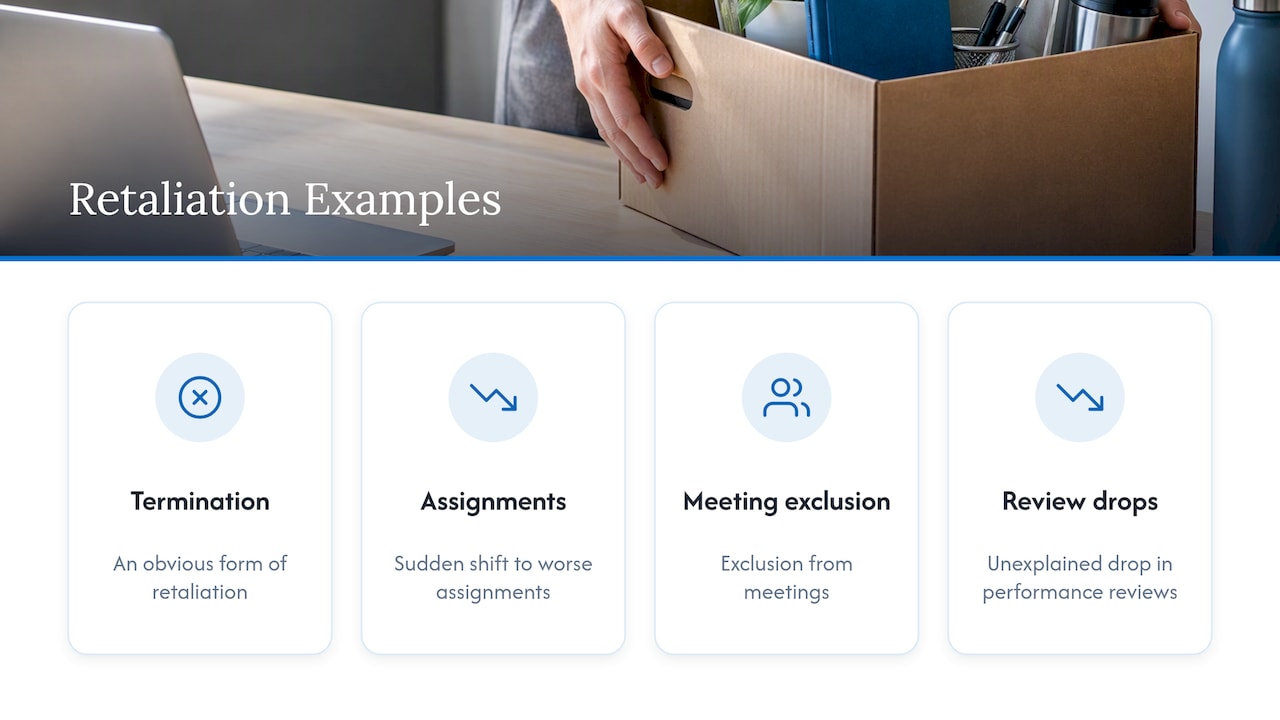
Retaliation can take obvious forms, like termination, or subtler ones, such as a sudden shift to worse assignments, exclusion from meetings, or an unexplained drop in performance reviews shortly after a complaint. Any sudden, negative change in treatment that follows a report is worth documenting with the same care you used for the original harassment, since retaliation claims often succeed on timing and pattern even when the underlying harassment claim is contested.
If you experience retaliation, the same evidence habits apply: write down dates, save communications, and note who was involved. You do not need to wait for your original harassment charge to resolve before raising a retaliation concern, and you can raise both in the same filing when the facts support it.
How employers can prevent it before it starts
Preventing quid pro quo harassment starts with policy, not reaction. EEOC guidance for employers recommends clear anti-harassment policies that define prohibited conduct in specific terms, rather than vague references to “appropriate behavior.”
Training matters as much as the written policy. Supervisors need to understand that their authority over pay, scheduling, and promotions creates a particular legal exposure, and that implicit pressure counts the same as an explicit demand. Regular, scenario-based training tends to translate better than a one-time compliance video.
Reporting systems need more than one entry point. An employee whose harasser is their direct supervisor needs a safe, separate channel, such as a second manager, an HR contact outside the usual chain, or an anonymous ethics line. Employers that investigate promptly and document their response consistently are also better positioned to raise the affirmative defense available when no tangible employment action occurred.
A clear-eyed note on what this guide can and can’t do
This guide explains the law and the practical steps, but it isn’t a substitute for an attorney who knows the specifics of your case. If you’re weighing whether to report or file, preserve your evidence now and get personalized advice before deciding your next move.
— Max
How Workplace Fairness supports you through this
We offer a membership for readers who want ongoing access to our employee-rights resources, and a Burnout First Aider Certification for anyone looking to build structured skills in supporting coworkers through workplace stress.

Explore our membership page to see what ongoing support looks like for workers navigating harassment, retaliation, and the documentation process on their own terms.
This article is general information, not a substitute for advice from a qualified lawyer. Consult a qualified legal professional about your own circumstances before acting on anything here.
FAQ
Is quid pro quo harassment illegal in the US?
Yes. Quid pro quo harassment is a form of sex discrimination prohibited by Title VII, and it can be actionable even from a single incident when submission or rejection is tied to a job decision.
What words does HR not want to hear?
There is no official list, but HR teams take specific, factual language seriously: dates, names, direct quotes, and a clear description of how a job decision was tied to a demand. Vague complaints are harder to investigate than a documented timeline.
What are examples of quid pro quo harassment?
Common examples include a promotion or raise offered in exchange for a relationship, a bonus withheld after an employee declines a supervisor’s advances, or a threatened demotion unless the employee complies with a request. The common thread is a direct link between sexual conduct and an employment outcome.
What are the three elements of quid pro quo harassment?
The three elements generally used by the EEOC and courts are unwelcome sexual conduct, a harasser with real or apparent authority over employment decisions, and a connection between that conduct and a tangible outcome like hiring, firing, or pay.